
Sierra Leone: AI and agriculture data for food security
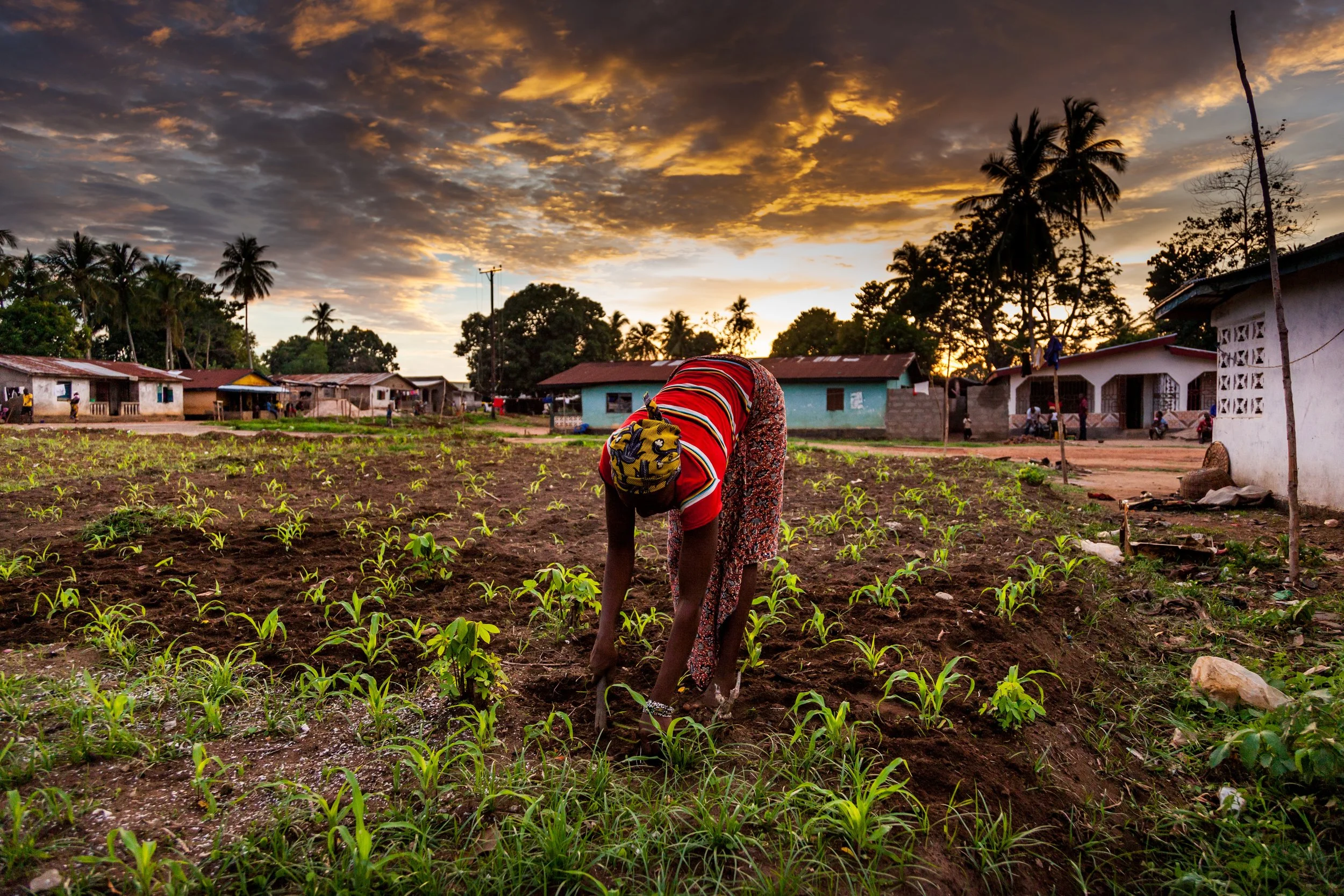
Woman working on a farm in Sierra Leone. Photo source: AdobeStock/robertonencini
Food insecurity remains a persistent and priority challenge in Sierra Leone. Working alongside government partners, we are strengthening agricultural data governance and building the technical skills needed to translate reliable, integrated data into better policy, investment and accountability.
This work is laying essential foundations for more effective AI-driven agriculture and food security decision-making. Stronger data systems, institutional capacity, and geospatial evidence will enable the effective use of emerging technologies to identify needs, target interventions, enhance services, and support farmers more effectively.
The work has been aligned with Feed Salone, Sierra Leone’s flagship national strategy for food security and agricultural transformation. It directly supports government priorities and responds to capacity gaps identified through an earlier institutional assessment. This approach capitalises on strong political leadership and creates the conditions for lasting government ownership.
At a recent data partnership convening, Sierra Leone’s Minister of Agriculture and Deputy Minister of Planning reinforced the need to move beyond data collection towards actionable use, highlighting three key priorities:
Stronger policy frameworks
Integrated data systems
Increased geospatial capacity
Together, these advances offer significant potential to make AI-supported decisions more timely, precise and accountable, helping Sierra Leone accelerate progress on food security and improve farmers’ livelihoods.
“To get the benefits out of AI, it's important that experts within the government are involved and trained in data validation. For governments to use AI they have to be able to trust the local data it is built on.
Our plan is to strengthen national coordination and integrate other data sources to build capacity for analysis and embed agricultural data and evidence in the national plans and budget. Right now most of what we're doing is donor-funded, but by building this capacity into the government's default function we make sure we are sustainably funding data production and use and not only depending on external funding."
Edward Kargabo, Deputy Director PEMSD/Unit Head Agricultural Statistics
Planning Evaluation Monitoring and Statistics Division
Ministry of Agriculture and Food Security
—————————————————————————————————————
We are grateful to the Bill and Melinda Gates Foundation and the Islamic Development Bank for their support of this work.